ACK! Attack of the Killer Mold

So just writing about my Kombucha angst yesterday inspired me to get up and brew some fresh Kombucha. I reduced the number of jars I’m brewing from 4 to 2 and put the month old stuff into my vinegar bottle.

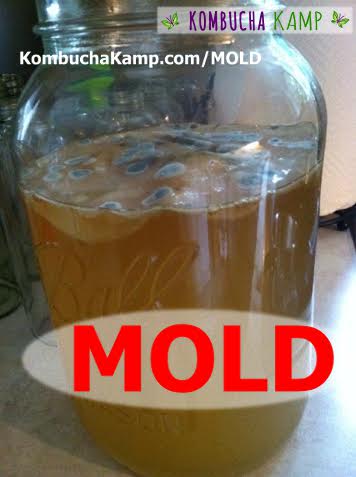
And then I opened up my jar with my Betsey Pryor SCOBY and look what I saw.

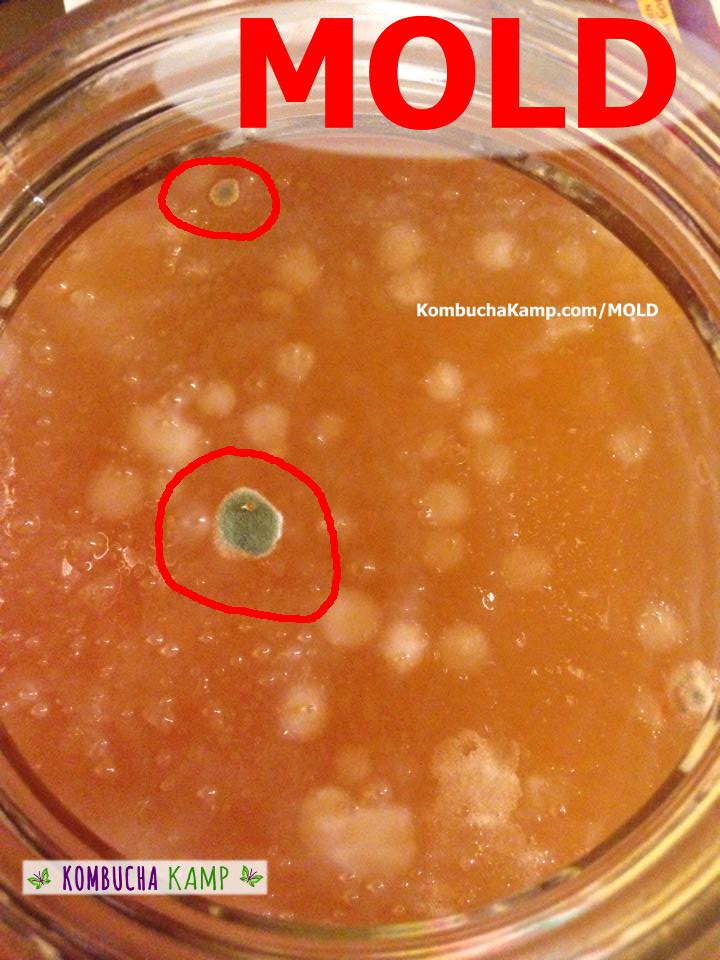
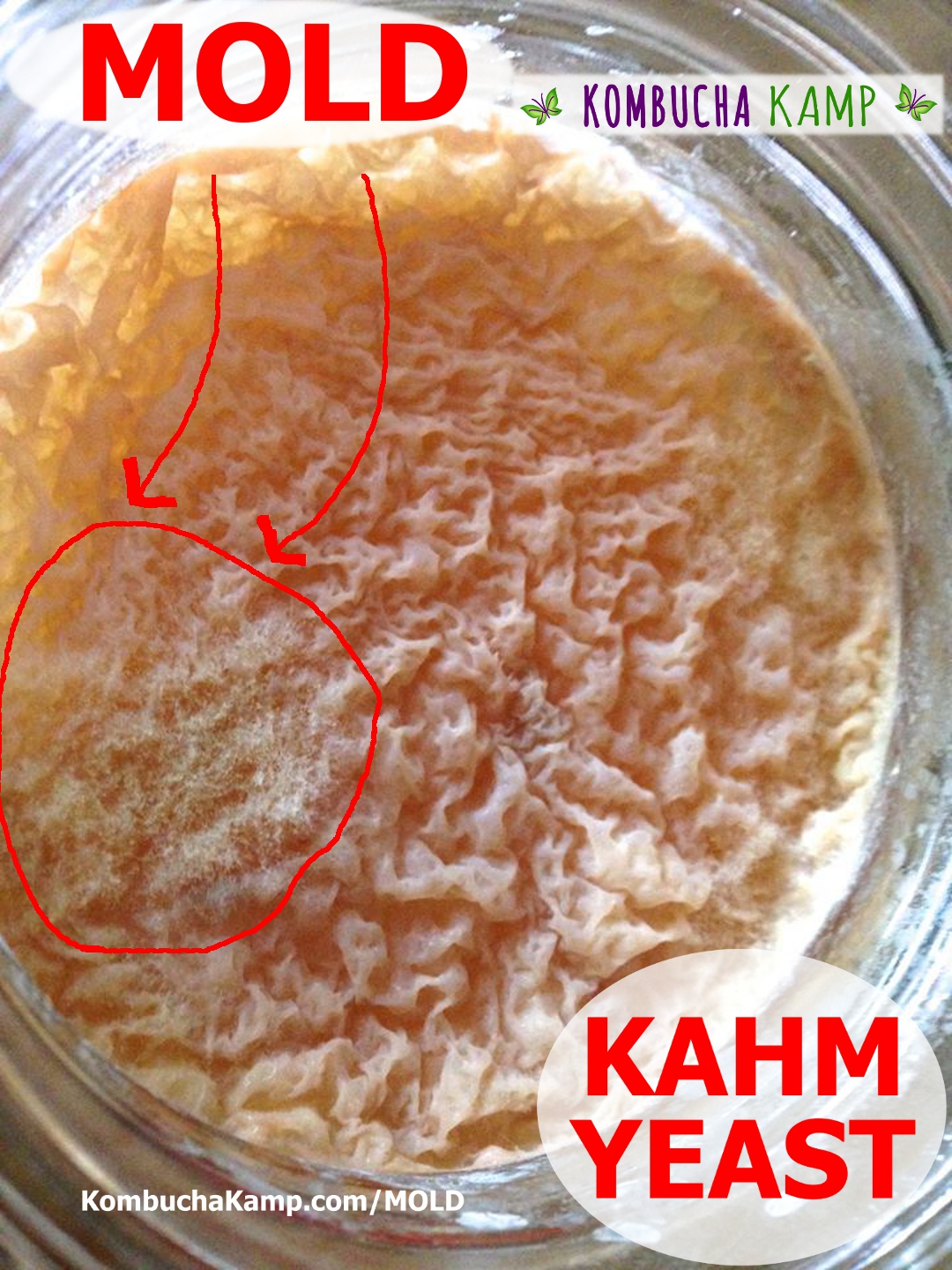
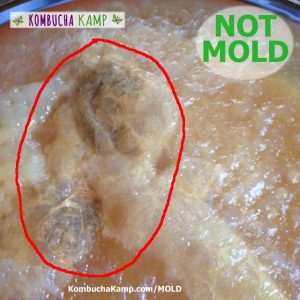
A very bad case of mold on top of a kombucha culture appears in large green circles and black coloring. The mold is dry and dusty, and completely foreign to the culture.

YIKES! I have NEVER had mold on any of my SCOBYs ever. So I guess I’ll just have to say goodbye to Betsey’s SCOBY for now. I threw the whole thing away. The SCOBY was covered with mold and very thin. The original mother stayed on the bottom the whole time.

Truthfully, I did not follow Betsey’s directions to the letter. I used filtered water like in all my other Kombucha and organic tea and evaporated cane juice. None of which is recommended by her.

Oh well.

UPDATED INFORMATION – May 2010

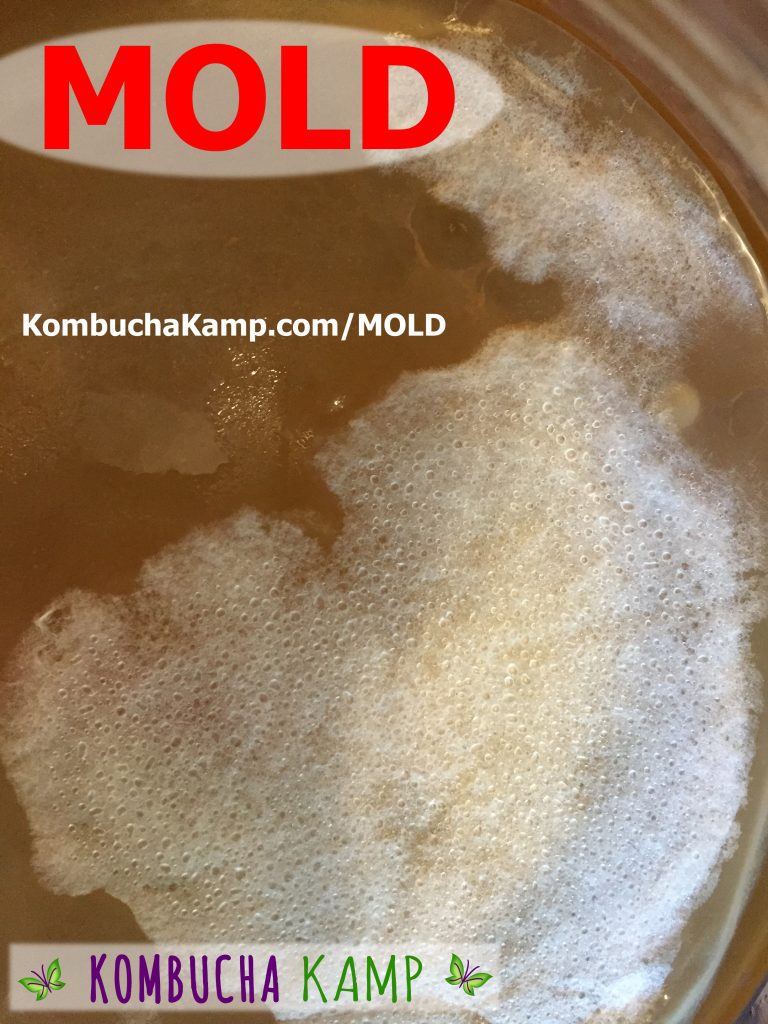
If you encounter mold, it is imperative that you throw everything away. DO NOT wash off the SCOBY and try to reuse it. DO NOT save any of the liquid that had mold.  The spores persist despite rising in vinegar.  Mold, while not deadly, is not to be consumed.  It is fuzzy, blue or black, grow on top of the SCOBY and is immediately identifiable.  If you’ve seen mold on bread, then you know exactly what it looks like.

This is one of the reason why you have got to have a SCOBY HOTEL.

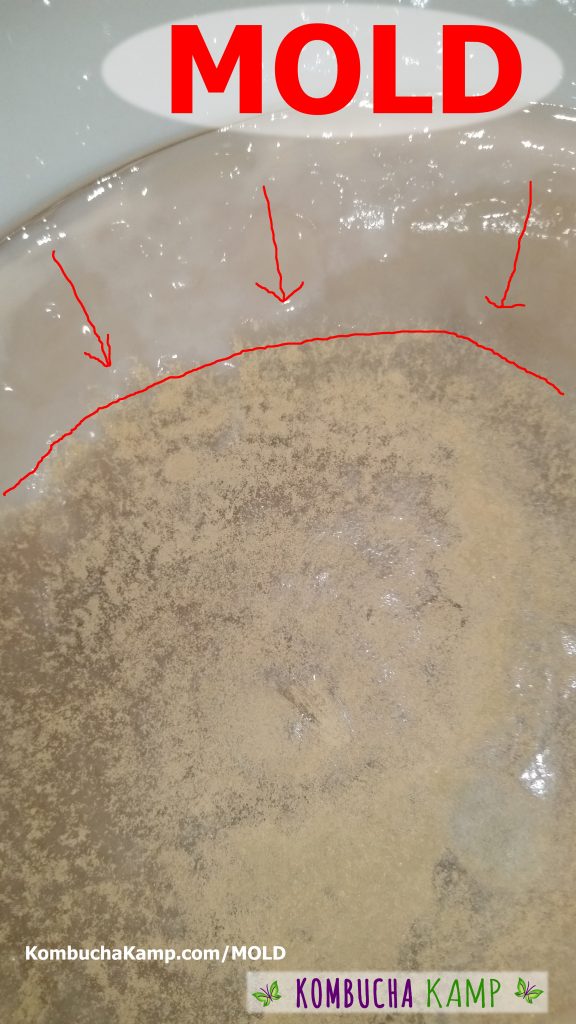
If you are unsure if your culture is growing mold or not, send me multiple photos from different angles and I will help you figure out what is going on.

This is still the only time I’ve ever encountered mold – it is quite rare.

Hannah Crum, the Kombucha Mamma!Hannah Crum is The Kombucha Mamma, founder of Kombucha Kamp, Industry Journalist & Master Brewer, educating others about Kombucha since 2004. Connect with her on Google +
Kombucha Mamma SCOBYs & Kits ship free in the US!
6 Responses to ACK! Attack of the Killer Mold
  1. Jesse

    I just had the same thing happen! But it’s the second time in a row? Any advise on why this is happening?

  2. Hannah Crum

    Hi Jesse,

    Mold is caused by different factors. Before the Kombucha has a chance to come to a sterile pH (usually takes about 3 days for a gallon sized vessel), the liquid is susceptible to being invaded by other types of bacteria or yeast.

    If you have mold, you HAVE TO THROW YOUR ENTIRE SCOBY and KOMBUCHA AWAY! Mold is deadly and not to be messed with.

    It can be caused by being your brew being too close to plants (the pollen can mess with the culture), or being placed in an unideal location (under the sink) or by not having a good amount of starter liquid (which is already at the proper pH).

    Drop me a line at kombuchakamp@gmail.com and I’ll help you troubleshoot your situation.

  3. Jane

    My kombucha got moldy, this is the first time i’ve tried brewing kombucha, and i want to know what i did wrong that let mold grow. i know i need to use sterile glass jars to brew it in, like, just out of the dishwasher, right? what about the cloth i cover it with?
    i have 1 more starter scoby i can try with, but if i get this one moldy too, i’m out of luck and have no more scobies to keep trying again, so i want to get it right this time. help?

    • Mold generally comes from a contaminant in the environment and usually enters the brew within the first 3 days of brewing. If you would like to discuss the specifics of your brewing process, I’m available for phone consulatations. Send me a message via the feedback form tab on the left hand side of the screen for more details.

  4. Allison

    My first attempt at brewing kombucha went moldy too. I threw out the baby and the tea, but I was wondering if I can try again with the same mother? The baby had mold on the surface and the mother was mold free, roughly the same color as when I got her and sitting in the bottom of the container. I put her in some vinegar for now. I know you said to throw it all out, but I’m reluctant as I spent ten bucks for a starter kit.. Do you think I could try another batch with the same mother?

    • Hi Allison. The mold spores remain in the mother culture even if there is no evidence of contamination. I advise getting a new culture.

Leave a Reply

Wanting to leave an <em>phasis on your comment?

Trackback URL http://www.kombuchakamp.com/2009/10/ack-attack-of-the-killer-mold.html/trackback
type your kombucha related question here
Loading

Continuous Brew mini-FAQ

By changing the starting ratio from…
1 Part KT:9 Parts Starter (orignial method)
to
3 Parts KT:1 PART Starter Liquid (CB method)
…the brewing cycle is dramatically reduced (just 1-2 days to complete).

Actually, CB results in less work.  One example: a more streamlined bottling experience, without the need to lift your brewing vessel, clean it every week or deal with the mess afterwards.

Sure, just drain mature KT and add starter liquid to taste.  Or for bottles, flavor as desired – no funnel, no mess!

Not at all.  Having it on tap will change your perspective.  Plus, you’ll find friends, family and neighbors eyeing your Kombucha set-up with envy and maybe even helping themselves to a fresh glass.

Don’t be nervous.  You have the experience of hundreds of homebrewers backing you up in the form of my detailed instructions and maintenance plan.  You will be guided along the way.  You will save time and effort.