

黑水龍年 Hei Shui Long Nian
Black Water Dragon Year

The mythical black water dragon has arrived!
The Chinese New year has arrived! The year of the Black Water Dragon couldn’t have had a more auspicious start here in sunny SoCal. Rain in the desert is always a blessing and it poured down buckets.
Having majored in Chinese and lived abroad in Taiwan, I have a special love in my heart for the Chinese culture and traditions. The Chinese culture has placed a high importance on harmony in nature through Feng Shui, harmony with the body in Traditional Chinese Medicine and harmony with the cosmos by following a Solilunar Calendar.
The Chinese first adopted the Gregorian calendar for business and day to day interactions in 1928, but for holidays, the solilunar calendar indicates when they will be celebrated. It consists of 10 Celestial Stems & 12 Earthly Branches.
Moreover each Stem is also assigned an element. The entire system repeats itself every 60 years (sexagenary cycle). Archaeological evidence suggests that some form of this calendar has been in use for nearly 5000 years!
Celestial Stem |
| Element |
| Earthly Branch | Animal |
子 | Rat | ||||
甲 | Yang | Wood 木 | 丑 | Ox | |
乙 | yin | 寅 | Tiger | ||
丙 | Yang | Fire 火 | 卯 | Rabbit | |
丁 | yin | 辰 | Dragon | ||
戊 | Yang | Earth 土 | 巳 | Snake | |
己 | yin | 午 | Horse | ||
庚 | Yang | Metal 金 | 未 | Goat | |
辛 | yin | 申 | Monkey | ||
壬 | Yang | Water 水 | 酉 | Rooster | |
癸 | yin | 戌 | Dog | ||
亥 | Pig |
take a look at this 41 page pdf about the Chinese calendar system.
Lunar Kombucha
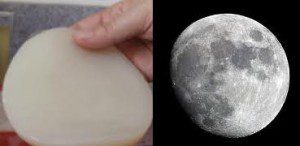
The SCOBY looks like a full moon
So what does the Chinese new year have to do with brewing Kombucha? As I’ve often commented, the Kombucha culture looks like a full moon and there are many who have noticed that the brewing cycle turns out the most delicious Kombucha when it is in harmony with the lunar cycle.
The concept of growing things in concert with the moon is one of the guiding principles of biodynamics. The theory was developed that the same gravitational pull that the moon has on the tides also applies to other living organisms.
Those who grow according to biodynamics observe the following cycle:
- New moon – plant seeds
- Waxing moon (growing bigger) – roots grow
- Full moon – foliage grows
- Waning moon (shrinking) – roots grow again
- Just prior to the new moon – both roots & foliage rest – this is a good time to transplant as the roots are resting
If we apply this to Kombucha, it would be best to start a batch with the new moon and then harvest your brew a few days prior to the next new moon. This cycle interestingly enough also coincides with 2 steps of the fermentation process. The healthy acids of Kombucha are expressed both at around the 15 day and 30 day mark of the fermentation cycle. If we match that up to the lunar cycle, then the healthy acids are expressed both at the full moon and then again right before harvest.

 Kombucha Mamma Sez: “Do you brew your Kombucha according to the lunar cycles? What have you observed? Leave a comment below!.”
Another way in which Kombucha is in harmony with nature has to do with its growing cycles throughout the year. You may have noticed that when it is hottest out, your Kombucha ferments rapidly, however, when winter comes, our brews slow down. Let’s take a look at why this happens.
SCOBY Hibernation
Bears do it. Bees do it. Even furry gray squirrels do it! SCOBYs do it, SCOBYs hibernate! At this time of year, when the days are short, the nights are long and it just seems like a better idea to stay snuggled up at home, many creatures take a nice long nap. While we think of hibernation as sleeping, its actually a state of suspended animation that protects the organism so that it can survive periods of inhospitable conditions. There is a limited food supply in the winter and for a bear to spend all day foraging, simply doesn’t make sense – so its evolved the capacity to go dormant.
This is exactly what the bacteria and yeast of the SCOBY are doing too! Have you noticed that the brewing cycle has increased significantly or maybe the newly growing SCOBYs are thin and listless. Yep, its winter and they are sleeping. In fact, there’s even speculation that humans could hibernate too and when you consider that we evolved from/with bacteria then it makes sense that we would retain some of this genetic heritage – but that’s a topic for another blog.
Bacteria are tough! They are surprisingly tenacious and can survive extreme temperature differences. Scientists have discovered bacteria that have been frozen for more than 250 million years! Taking a quick snooze is an important survival strategy and its how many bacteria are able to outsmart antibiotics. Antibiotics are designed to kill off bacteria that are metabolically active. While some of the colony will be active, others will remain dormant in the form of an endospore. This dormancy allows them to avoid the antibiotics and continue to survive. As you can imagine, it is this phenomena that has made chronic illness tough to stamp out entirely. Its also why the doctor tells you to finish the entire course of the antibiotics even if you are feeling better after a few days.
In fact, many are realizing that the best way to keep “bad” bacteria in check, is by populating the gut with beneficial bacteria. Learn about enterotypes and the benefits of probiotics.
Kombucha Mamma Sez: “You may have also noticed the converse, that in summer, your Kombucha brews much faster. This year, take advantage of the shortened cycle to brew extra bottles for Fall – plus the longer bottle conditioning time will improve the taste of your KT.”HOW TO KEEP SCOBYS SAFE THROUGH WINTER
 The first step in caring for cultures through the winter is temperature control. Most people keep the heat on low in winter to save on fuel costs. This is smart and thrifty but will lead to long brewing cycles or dormant cultures (don’t worry, they will wake up again!).
To maintain the health of the culture, it’s best never to store them below 50 F. Any colder than that and, while they won’t die, they will go deeply inactive until you revive them. When you finally decide to reawaken that SCOBY from it’s below 50 degree slumber (usually in the fridge), the very sleepy bacteria cannot defend themselves like they usually do, making them more vulnerable to mold and other invading microorganisms. Even if it is uninfected, the first few brews will be weak as the culture revives. For these reasons, storing extra Kombucha SCOBYs at room temp is superior to fridge storage.
Kombucha Mamma Sez: “Very brief exposure to cold, for a few hours to a couple of days, should have no long term effects on the culture. That means mailing or transporting it by hand through cold conditions is fine. Just allow the culture and starter liquid to return to room temperature over a day or two before brewing..”As we have discussed, the ideal temperature range for an active Kombucha brewing culture is 75-85 degrees Farenheit. There are a myriad of ways in which people try to keep their cultures warm – crock pot, blankets, and bathing your vessel in water with an aquarium heater are but a few. (For more DIY ideas, check out Echo’s article in the KommUnity ).
Any method you choose will be a good one, as long as you don’t create a fire hazard. Use caution! That is why we created the Kombucha Kamp Essential Heating Strip and Year Round Heating System with Dimmer. They take out the guesswork and are specifically designed to work with a variety of fermented products. They also come with a thermometer strip that attaches to the fermentation vessel, displaying the temperature at a glance.
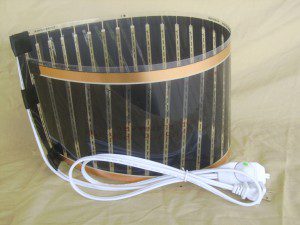
The dimmer system provides the necessary heat but allows the yeast to go dormant as part of their natural respiration cycle.
Moreover, balance is maintained by heating from the sides rather than the bottom of the vessel. Yeast have a well documented fermentation cycle, the last stage of which is sedimentation where they go dormant and save reserves for the next cycle. If provided with a constant source of heat on the bottom, they may not have a chance to complete the cycle and will lose their vitality thus causing your brew to be out of balance.
However, even if you are maintaining this temperature and doing everything else right, your cultures may still be more sluggish in the winter. They are sensitive not only to temperature but other environmental factors.
That means that during this season it is important to rely on sense of smell and taste buds in addition to eyesight. Some brews may not form a full thick SCOBYs or any SCOBY at all yet still produce a tasty Kombucha. Test the pH to make sure that it is in the range (3.0-2.5), this will ensure that your brew is fermenting properly. It will reach this level within the first 3 days of normal brewing conditions.
When starting a new batch in winter, since the fermentation process is slower, one option to improve the brew is to increase the amount of starter liquid, providing extra protection from other microorganisms that may cause mold. Typically the ratio of starter tea is 1 cup to a 1 gallon batch. In winter, try bumping that up to 2 cups and see how that affects the cycle.
Kombucha Mamma Sez: “Remember to always take starter liquid for the next batch from the top of the previous batch so as to maintain the proper balance of bacteria to yeast.”If you don’t want to sacrifice the extra cup of starter liquid from your drinking Kombucha, add a cup of distilled vinegar (THRIVE, AMZ) or pull 1/2 a cup from your SCOBY Hotel. The liquid in a SCOBY Hotel will tend to be on the sour side, so less is needed. Replace the starter from the Hotel with sweet tea to keep the bacteria & yeast active.
Continuous brewing is the safest method in the winter because the consistently higher amount of already fermented Kombucha will protect the cultures and keep them healthy through the slow period. Plus, if you want to take a break or go on vacation, the cultures have a safe place to hang out until you are ready to start the brewing process again.
Patience, persistence and practice will pay off. Tuning in to the natural rhythms and cycles will deepen your relationship to Kombucha, your body and your environment!






Bonnie Francisco
January 31, 2014 at 5:44 pmI started a tea from a SCOBY that was kept in the fridge. By the end of the 9 days, there were small spots of mold on top of the tea. The SCOBY was at the bottom but was free of mold. Is it safe to do another batch with the same SCOBY? I threw the molded tea away.
Hannah Crum
February 3, 2014 at 2:56 pmWe always recommend throwing away moldy brew. Here is a blog post with more details about mold. This post discusses why we don’t use refrigerated cultures.
Nikki
April 15, 2012 at 12:17 pmThank you for all the great info! I’m having trouble with my first batch of kombucha. I got a beautiful SCOBY from a friend & stored it in the fridge for a week (in a jar with kombucha). I brought to room temp before attempting my first brew. I may have made a big mistake though… I accidentally left the tea bags in the boiled water for a couple hours before starting the brew. It’s been 2 weeks & it still tastes sweet & like tea. It’s also still only around 65 degrees in my house. I saw a thin baby growing on top twice but both times it sank to the bottom of my brewing jar. Can this batch be saved or can I start over with this same SCOBY & some GT’s store bought kombucha? Thanks!!
hannah
April 24, 2012 at 12:47 pmHi Nikki – sounds like you are brewing at too low of a temperature. The ideal range for Kombucha is 72-85 degrees. No matter if you start over, you still won’t see success until all of the right elements are in place. Take a look at our heating systems – a simple investment can bring you a lifetime of healthy KT!
otehlia cassidy
February 15, 2012 at 8:01 amA much nicer way to think of the scoby than I do! Or maybe once it’s in the jar, it loses that natural beauty:)
Jessica Thompson via Facebook
January 26, 2012 at 4:36 pminteresting, glad i started a brew on mon jan 23
Echo
January 26, 2012 at 3:43 pmHannah, I LOVE this format! Eye-catching and so informative!
Echo
hannah
January 27, 2012 at 12:43 amThanks Echo! =)
Kombucha Kamp via Facebook
January 26, 2012 at 11:40 amyes – that will hold the flavor of your tea where you like it.
Bernadette Johnson via Facebook
January 26, 2012 at 11:39 amcan you keep the tea in the fridge?