Sugar is truly a wondrous, misunderstood building block of life. It is nature’s gasoline: real, honest and pure energy, and when delivered in an easily digestible form, incredibly efficient!

The classic Big Brother tries to kill Little Brother with "Pixy Stick Choke Maneuver." Well played.
And yet, is there a necessary-for-life substance in our society with which we have a more tortured relationship than sugar? How did we end up in such a BATTLE with something we desperately need to survive? I have some ideas, but as always, the answers to “how” are not as important as the answers to “what now?”
Pounding candy bars and soda pop is a rite of childhood that is born directly from the needs of the body. Kids are growing and they need energy. That’s how horrible/wonderful products of my youth like FunDip or Pixy Sticks became my favorites.
As I grew up, I started taking my alcohol with lots of sugar. Dessert was my favorite meal. Snacks took their toll.

Sugar stick dipped in sugar? "Absolutely!" was my answer before Kombucha.
But then something funny happened on the way to the Kombucha Forum. As my Kombucha consumption became more regular, I noticed that my sugar cravings were decreasing. At the same time, the “sour” taste of the Booch dissipated and became more natural to my palate.
As Kombucha slowly alkalinized my blood, my body kicked those cravings completely. These days, my sugar cravings are entirely mental. Once I have dessert in front of me, I rarely eat more than a few bites. The spirit is willing, but the flesh is *strong* and doesn’t want anything to do with that insulin spike. This is one of the greatest Kombucha benefits I have experienced.
That is why misgivings about Kombucha & Sugar are mostly misguided. Without the sugar, there is no fermentation, and without fermentation, there’s no good stuff to feed your body.
So let’s ask Wiki before we get started. Hey Wiki, what’s sugar?

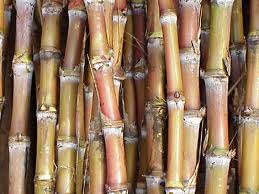
Sugar cane is a grass that originated in India.
Sugar is a term for a class of edible crystalline carbohydrates, mainly sucrose, lactose, and fructose characterized by a sweet flavor. In food, sugar almost exclusively refers to sucrose, which primarily comes from sugar cane and sugar beet. Other sugars are used in industrial food preparation, but are usually known by more specific names—glucose, fructose or fruit sugar, high fructose corn syrup, etc.
BONUS FACTOID: Sugar cane originated in India and the English word for sugar comes via Arabic سكر sukkar from Sanskrit शर्करा sharkara
Okay that sounds about right. Here is a simple Sugar FAQ to settle your nerves once and for all about Kombucha & Sugar:
1. Do I have to use sugar? I never consume sugar so it puts me off Kombucha.
The sugar in Kombucha is for the culture to consume, not for you. When done fermenting, there will be about 1-2 grams per 8 ounce glass of unflavored Kombucha. By contrast, an 8 ounce glass of orange juice has about 24g of sugar. Natural carrot juices have 13g per 8 ounces. If fermented longer, say for 2 weeks, sugar levels in Kombucha are even lower – Recommended for diabetics and others with low sugar tolerance.
2. Why does Kombucha need so much sugar?
Without sugar, Kombucha cannot ferment. Sucrose is most easy to digest by the yeasts; they consume the sugar and put out CO2 (carbon dioxide, i.e. the bubbles in your booch) & ethanol (alcohol). Which is nice.
BONUS FACTOID: Then, as part of the symbiosis, the bacteria consume the ethanol and express the healthy amino acids, trace vitamins and minerals.
3. Do I have to add all of the sugar?
Yes. The standard Kombucha recipe is 1 cup of sugar per gallon. Too little and you are inhibiting the brew’s normal healthy development; no SCOBY, no acetic acid. Too much and the yeasts will either a) “flush” and overrun the bacteria, or b) fall completely asleep and do nothing.
4. What type of sugar should I use to brew Kombucha?
This debate can be heated, but it’s really simple. Most sugars are fine for Kombucha (with a few exceptions, see below), but there are preferred choices:

The color of sugar is determined by how much molasses is left after processing.
- Plain White Sugar- the Kombucha culture consumes this easiest. Use only “cane sugar” to avoid GMO beet sugar. Concerns about trace toxins in white sugar processing should be considered.
- Evaporated Cane Juice – My personal choice. Cleaner process but slightly more difficult for the Kombucha to consume.
- Brown Sugar – Harder for the Kombucha to break down, it will also change the flavor significantly. Experimental batches only.
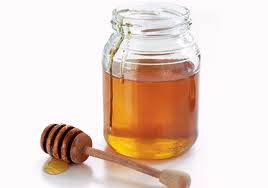
- Honey – A wonderful choice but DO NOT USE RAW. The bacteria will disturb the Kombucha SCOBY balance and could brew up a dangerous concoction.
- Agave – Can turn the brew more sour, so use less. Must be combined with another sugar type that contains glucose for the long term health of the culture.
For more details including ratios for how much to use per gallon, check out Types of Sugar to Use for Brewing Kombucha.
BONUS FACTOID: Evaporated Cane Juice and brown sugar have higher levels of calcium, magnesium, potassium and iron. These healthful elements are passed on to the Kombucha drinker.
5. What types of sugar must be avoided when brewing Kombucha?
- Raw Honey – The naturally occurring bacteria will battle the SCOBY for dominance. It sounds bad because it is.
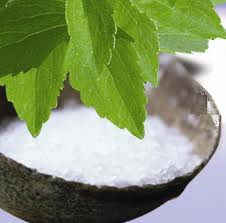
- Stevia – Stevia is a plant sugar and will not ferment.
- Xylitol (and it’s precursor Xylose) – What makes Xylitol great for chewing gum and teeth is that it’s “non-fermentable,” which makes it useless for the booch.
- Lactose – Kombucha is not lacto-fermentable.
- High Fructose Corn Syrup -Must I explain? Your body can’t even break this stuff down.
- Any Artificial Sweetener – I have heard some crazy ideas: Erithritol, Aspartame, Sucralose, Saccharin?! Someone asked if they can use Mountain Dew as starter. No. No you cannot.
BONUS FACTOID: High Fructose Corn Syrup caused a higher incidence of obeseity and metabolic diseases in rats than sugar (sucrose) in a study done last year by Princeton.
6. Can mutliple types of sugar be combined into one Kombucha brew?
Absolutely! Just as with tea blends, sugar blends can add flavor and depth to your brew. Have fun and experiment!
7. Organic? Fair Trade? Do these things matter?
Not to the Kombucha. Only to me. I make these (slightly more expensive) choices for my physical and mental health. However, no one should ever put off brewing Kombucha for fear of expense. Lipton tea bags and plain white sugar will get the job done just fine.
8. What if I forget to add the sugar? Can I add it after without harming the SCOBY?
Yes. If it has only been a few hours to a day, remove the SCOBY, add the sugar to the brew, stir and then return the SCOBY to your vessel. The sugar will be consumed by the yeast eventually, but the process may take a few extra days.
9. The science is confusing. What are fructose, sucrose & glucose?
- Sucrose (C12H22O11) = Regular Table Sugar = Fructose + Glucose
- Fructose (C6H12O6) = Natural Fruit Sugar
- Glucose (C6H12O6) = The most commonly used energy source in the biological world. Also known as dextrose.
Kombucha fermentation breaks down sucrose into fructose and glucose which feed the yeast which feeds the bacteria which feeds you. Awesome!
10. Is there a way to test for how much sugar is left in my brew?
Sure you can use a hydrometer to measure both the sugar and the alcohol content of your brew. Or, if you want something a bit easier, you can try an Accuvin residual sugar test.
—————————
Have any other questions about sugar? Experimented with types and combinations and want to share your knowledge?


Great info, thank you!
I have some ph strips. Is it possible to find out how much sugar is in my kombucha based on the ph level?
Thank you.
The pH strips won’t accurately measure how much sugar is present in the Kombucha. Check out the links in #10 above for more information on what kind of test kits are available.
☮ & ♥ Hannah
Really nice breakdown on sugar and kombucha! Put a lot of my fears to rest about making my own kombucha. It is wild that we take white sugar and black tea (two things I avoid) to make such a tasty and healthy drink.
I see from your blog that you are gonna start homebrewing – you go mama!!
It is pure alchemy the way the culture works.
super interesting! I had nooo idea! Thanks girl!
Do you get your Kombrew on? What’s your sugar of choice?
I’ve been buying beet sugar on a “buy local” philosophy (I live in Michigan, where beet sugar is a big product), but now the gov’t has just OKed “Roundup Ready” GMO beets. That’s the end of that! I think I will switch to Evaporated Cane Juice. You say that it’s harder for the scoby to consume. Is there anything I would do differently or need to take into account when switching sugars? Is it a longer ferment? Thanks!
Due to the extra minerals present in the ECJ, it takes slightly longer to ferment and the minerals that the yeast and bacteria aren’t able to break down are passed along to you in your KT. Bonus!
What is the best way to add sugar? I’ve just been dumping it on top. Is it better to stir into the liquid?
The best way to add sugar is to stir it into your hot tea solution so that it can dissolve. This makes it easier for the culture to digest. Check out the Kombucha Recipe for the best way to make your KT nutrient solution.
I wanted to make sure I understood that evaporated cane juice, was the liquid, or thick syrup, as compared to sugar granules.
And how much should I use in a gallon batch, or less.
When I say Evaporated Cane Juice, I mean in the crystalline form also known as “Sugar in the Raw”, turbinado sugar, etc. I’ve not used cane juice as a liquid but would love to hear from someone who has.
Click the link for the best Kombucha Recipe.
FYI, Sugar in the Raw and Turbinado sugar aren’t the same as evaporated cane juice. They are both refined, just not bleached and milled. Sucanat/Rapadura are whole/unrefined would be considered lateral choices to evaporated cane juice though. A great source for explaining all types of sugars (ECJ, molasses, date sugar, brown rice syrup, stevia, maple syrup, turbinado etc..) and their health benefits or lack thereof is a book called David’s Pure Vegetarian Kitchen (pages 176-178). I would recommend anyone wanting to brew to Kombucha with ECJ that’s on a budget to buy it at Costco. It’s in a green bag and has the brand Wholesome Sweeteners on it. My local Fred Meyer/Kroger as well as Winco Foods has it in the bulk, natural food bins as well.
Thanks for the tips Amber! I’ll have to check out that book. Yes, I buy my ECJ in bulk too – definitely saves $$
So glad you commented on when to add the sugar as well as if you forgot to add where and when to add it. I’m brewing a second batch which I divide into two containers (8cups in each) one container has a nice scoby growing on top. The other looks like bubbles and wants to grow but has nothing. We had a little less sugar than I thought when brewing so I think I’ll add a little today(1 1/2 days from brew) and see if that helps it grow. Any other thoughts?
Nice one with the Kombucha culture! I love to revel in anything ‘bucherie.
One thing, “As Kombucha slowly alkalinized my blood” this isn’t true, if your blood did turn alkali then you would die, your body keeps the pH around 7.35 to 7.45 which is slightly alkali, but any more than that and you have serious problems. And Kombucha is actually acidic! If anything it potentially has the ability to cause acidosis, which is where the body gets too acidic, which causes major problems also, however there are no reported cases of this from drinking kombucha, doesn’t mean it can’t happen though.
Hope you don’t mind me butting in here and clearing these things up, just I see lots of misinformation on the net. I see it as a kind of duty to dispel ignorance wherever I can.
Hi Indie, thanks for your comment but I think there’s a little confusion going on here.
Alkaline is defined as “having a pH of more than 7.” So therefore, if your body’s pH is being nudged upwards through Kombucha consumption, that would accurately be termed “Alkalinizing.” Your figure of blood pH ranging from 7.35 – 7.45 is accurate for optimum human health. Even dipping to 6.95, just barely on the side of acid, can result in coma and death. Blood must be alkaline in nature.
To your second point, I believe you are confused about the difference between the nature of Kombucha, which is acidid, versus the effect it has on your body, which is to make it Alkaline. Similar example: Lemon Juice is also acidic but causes the body to become more Alkali. The key difference is an “acid food” versus an “acid forming food.”
This is a common misconception about how pH works in the body. Essentially, the Kombucha (and lemon juice, and other similar foods) create residue or “ash” in the body that creates alkalinity.
Regarding acidosis, in normal healthy individuals, Kombucha will not cause acidosis. If your body is broken, and you keep feeding it anything it can’t process (acids, enzymes, etc) an imbalance can develop.
I can see I need to do a post on pH to clarify these issues. Thanks for your comment!
Wow.. this is great. I have an immune disorder not yet diagnosed but I am sick almost every month with a cold/flu. I had severe mononucleosis as a child @5 years and subsequent to that in childhood suffered from strep throat++, shingles @12 years, bile attacks,impetigo,oral cold sores with frequent flu and chronic fatigue as an adult with very low energy/immunity as an adult. I have stress intolerance.. as soon as I feel stressed I seem to develop a cold or flu like illness with extremely low energy. It is very hard
living with this as it is an invisible chronic illness and many doctors don’t want to do an exhaustive study to find the cause. I feel like a have an immune disease and am willing to try anything to live. Thank you for your effort to put this info out there..it is priceless and appreciated greatly. God bless you.
Hi Shah,
Your story sounds very familiar to me. After 36 years I have found a few things that have made a huge difference to health.
Feel free to contact me If you like. I am not selling anything at all I can just relate to your issues.
Hello: We’ve been making kombucha for about 3 months, and we’re now trying to watch our sugars. Did you test yourself to see if there was a reduction in sugars? Did you test it before and after the fermentation process to see if there was a difference? If so, which instrument did you use. Thanks for your help!
Hi Kathy! The culture consumes the sugar and converts it into healthful acids. You can use a refractometer to detect the amount of sugar remaining in your KT. The longer you brew it, the less sugar it contains. Taste is an excellent guide. Less sugar = less sweet.
The pH strips won’t accurately measure how much sugar is present in the Kombucha. Thank you for your effort to put this info out there..it is priceless and appreciated greatly. We had a little less sugar than I thought when brewing so I think I’ll add a little today(1 1/2 days from brew) and see if that helps it grow. Alkaline is defined as “having a pH of more than 7.” So therefore, if your body’s pH is being nudged upwards through Kombucha consumption, that would accurately be termed “Alkalinizing.” Your figure of blood pH ranging from 7.35 – 7.45 is accurate for optimum human health.
The culture consumes the sugar and converts it into healthful acids. If your body is broken, and you keep feeding it anything it can’t process (acids, enzymes, etc) an imbalance can develop.
I have successfully brewed my booch using Whey Low. It takes a bit longer to reach the proper ph but it tastes the same and my Whey Low mother seems just as healthy as my regular sugar booch batch.
What is Whey Low? Sounds interesting!
Hi, I have been making Kombucha for about a month. I brew it for a week and then put in some feozen grape juice and brew that for about 4 days. My husband wants to begin consuming it with me and he is a diabetic – can he drink it with the grape juice – if I let it ferment a while? I also have to watch my glucose, and I notice if it goes above 100. I don’t seem to be feeling any effects from the brew. Thanx in advance for your advice.
Jill <
Sounds like your body is receiving the Kombucha well. Typically those who have sugar restrictions have fermented their KT until most of the sugar is converted. You might try testing your levels both before and after consuming the Kombucha to see what effect it has. Every body is different – trust your gut!
I hope you don’t mind a question here. If I add a few mushrooms to newly brewed tea/sugar will it ferment faster?
Yes the greater the ratio of cultures and fermented kombucha that you add to the sweet tea, the faster the ferment.
Thanks! How much faster?!
Also – when I put my fermented batch into smaller containers to second-ferment on the counters (to get sourer/fizzier) they form a little baby on top. What should I do with these?
Only your tongue will know! That is the art of fermentation (as opposed to the science).
Best not to brew with scobys that form from flavored Kombucha to brew with, chuck them or use in the garden? Have you gotten our free e-book yet? There are a lot of tips for new and experienced brewers. Check it out: http://www.kombuchakamp.com/what-is-kombucha-tea
Oh well – I added them to today’s newly-started batch – hopefully it will be okay. Thanks for all your help!!
Hi Hannah,
I have a slight sugar cane food sensitivity. Is the sugar that remains in the KT a bi-product of the fermentation, or is it still cane sugar? I’m trying to decide if I should try out a different sugar starter or go with the tried and true on my 1st batch.
The sucrose molecule is broken down into glucose and fructose through the fermentation process. Try it with sugar and if you find your body cannot tolerate it, then use a different sweetener. If you have been drinking any commercial brands with no issue, then likely it isn’t adversely affecting your organisms because nearly all commercial brands are brewed with sugar. Trust YOUR gut!
Kombucha is hearty and can survive many mistakes, so don’t worry about it and just follow our tips moving forward for the best results. Happy Brewing!
How about raw turbinado?
Though brewing with raw honey is not good, i assume flavoring with raw honey would not a good idea?
Linda, I read turbinado is harder for the scoby to digest also, you can use it but not with every batch.
Tawnya if you want to flavor with raw honey it won’t affect your culture so go for it and let us know how it goes.
my family was starting to feel “under the weather” so i flavored a batch of KT with raw honey, raw shaved coconut and fresh lemon (for all of their independent health benefits). The tea was delicious and we were feeling MUCH better 2 days later, symptom free…turns out, there was a pretty nasty virus going around our town (adenovirus, which originated in one of those splash fountain play areas) and people were reportedly sick for 7-10 days… i am certain that drinking the KT and starting it early significantly reduced our symptoms and sick time! just wanted to share
Linda turbniado is fine, Tawnya is right it might be digested a little more slowly by the culture but the Kombuchs will eat it up just fine every time.
Thank you for your post; gives me a much better understanding of what happens to the sugar in kumbucha tea.
I have done it already,I like it with honey, honey and cinnamon, or plain cinnamon. Even the plain cinnamon has a sweetness to it, it does not say there is any sugar in it but I wonder. Thanks.
I use raw honey.
How much honey did you use and how did it turn out?
Just made my 2nd batch and the Scoby sank and is not on top. Is something wrong or will it make its way back to the top?
Sink or swim – it doesn’t matter where in the vessel the culture lives. The new layer ALWAYS grows across the top.
Hi! I have just recently found your website and I love it! I do have a question for you. You said not to use too much sugar. The person we got our SCOBY from said to use 2 cups sugar, 2 cups previous batch, and 4 tea bags when making kombucha. It tastes great but now I’m worried about I being out of balance. New SCOBY’s are forming with each batch. But is 2 cups too much?
Hi – I have a question. Obviously one can’t use stevia or Xylitol in the culture, but is it still ok to use either/both in other things while drinking kombucha? Or does the Xylitol especially kill the bacteria? I use both in cooking and don’t want to undo the good work of the kombucha!
Yes, you can sweeten your Kombucha the same way you sweeten your iced tea!
Can Fructose be used instead of cane sugar? Myfriend got mehooked on drinking kombucha, she had started her own. And i got my scoby from hers. I have made two kombucha batches with white cane sugar and both have turned out well. I like more fizziness. So when I bottle it for counter fermenting I add a small piece of dehydrated apple. This gives just enough sugar for the fizziness and the after 3 days I refrigerate it.
I use bottles that cap securely to keep I the natural carbonation. It flatvors only slightly. My kombucha is half Ceylon/Assam and half green tea. My flavor is complex with citrus notes, pear and apple tastes. Others who taste it say is reminds them of a finer champagne because the fizz is so delicate but persistent. I’m enjoying it greatly as the health benefits have been so evident for me.
I have a degenerating disk in my neck which causes a lot of pain in my neck, shoulders and even in my arms due to the disc location. Once I started drinking 8 oz of kombucha ea day I have had relief of this pain and reduced my chiropractor visits!
This is winter I haven’t experienced any arthritic pain since drinking kombucha. It has been 5 weeks now. I will continue this for the rest of my life. My daughter drinks it now and has had her acid reflux cured and her yeast imbalance corrected in just 3 days . I know I will need to start two more gallons fermenting now since everyone in my home will be kombucha drinkers!
While fructose can be used and some use exclusively fruit sugars for their booch brewing (see post here —> http://www.kombuchakamp.com/2011/05/kombucha-recipe-how-to-make-gts-kombucha-flavors-at-home.html)
However, some of the acids that aid in detoxification are specifically fed by glucose (the other molecule in sucrose aka sugar) namely the glu-conic acid & glu-curonic acid. If you want to cultivate those acids specifically, using sucrose (sugar) is ideal.
Hello there,
I just brewed my first ever batch of Kombucha 9 days ago. I realized almost immediately that I put in roughly 1/8- 1/4 cup too much sugar (I was making only 1/2 gallon while my friend was making a full gallon, and I got carried away.
I’ve tested the booch every day since day 7 and it’s too sweet, which I figured would be the case. It looks and tastes fine otherwise, just not “done” yet. I assume I just need to give it more time to consume the extra sugar. But since I’m new to this, I would love an expert opinion. Is there anything to be concerned about?
Thanks!
Rachel,
Yes, give the culture some time to convert all of the sugar. Your tongue will tell you when it is ready!
Hi!Hannah,I would like to know,How long can I keep my kombucha tea? Should I keep it in refrigerator? And how about the taste? Stronger? Thanks a lot.
Hi Nee. You can store your Kombucha indefinitely either in or out of the fridge. Kombucha never “goes bad” or spoils due to its acidic pH. Now, the flavor will continue to change in the bottle. Storing it in the fridge will slow that process down but not stop it completely. I personally enjoy bottle aged Kombucha. The longer it sits, the more of the sugars are converted into a dry, crisp flavor. YUM!
Can I put more sugar to keep the taste? Thank you very much..cheers!
You may add sugar to your glass of KT just as you would to sweeten a glass of iced or hot tea.
Hi, I used about 2 cups of ‘sugar in the Raw’ in a little over a gallon of black/green tea mix. It’s been about 3 days and I see some yeast globules forming and what looks like white little bubbles forming dispersed throughout the mixture. Do you think I used too much sugar in it? I really hope it works. Should I be seeing anything else or do you think the yeast will overrun the bacteria? By the way, I did use a bottle of high country kombucha instead of a scoby(first mistake).
Yes – you used too much sugar. Doesn’t mean that it “won’t work” but for the long term health of your culture and to maintain proper balance between the yeast and bacteria it best to stick to 1 cup per gallon. Not to mention it will save $$ over time as you won’t be wasting resources.
Is it okay to add sugar during flavoring/the second fermentation phase, if so how much?
Yes. Add it to taste. Start with a pinch and increase from there.
Hi…I just started a small experimental batch using date syrup for the second fermentation….so am hoping that will work. I’ve got to believe that someone out there has tried it. Any thoughts?
Sounds like you will get a tasty booch with good carbonation. Let us know how it tastes =)
I am using the continuous brew method and am loving it. So every couple days I drain 5 cups, or about 1/4 of the batch. Then I add 5 cups of fresh sweet tea to the 15 cups of kombucha that are left behind. How many tea bags and how many cups of sugar would you suggest I put in the 5 cups of sweet tea?
Thanks!!!
Depending on how often you top off your brewer, you can make a gallon batch of sweet tea and store the remainder in the fridge until you top off next (stays good for about a week – 10 days). Or you can scale the recipe by making 1/4 the amount of sweet tea. Since it is 1 cup of sugar and 3-5 tea bags per gallon, that would mean you need 1/4 cup of sugar and 1 tea bag to make 1/4 of the sweet tea solution. Grab our recipe here if you don’t have it already.