You’ve heard about it, you’ve maybe sniffed it or perhaps even tried a sip.
Your ‘Booch-loving friends might tell you Kombucha is: funky, raw, fermented, probiotic, good for you… but what the heck is the stuff?
In short, Kombucha is a fermented drink made from tea, sugar, and a living culture of yeast and bacteria. Through fermentation, this sweet tea transforms into a tangy, lightly effervescent beverage that has been enjoyed in various forms for centuries.
At its core, Kombucha is simple. But like many fermented foods, its simplicity gives rise to depth, variation, and character – shaped by time, temperature, ingredients, and care.
This page is designed to give you a clear, grounded understanding of what Kombucha actually is, how it’s made, and why so many people are drawn to brewing it themselves.
A Living Beverage Explained
Kombucha tea is made by fermenting sweetened tea using a SCOBY, which stands for Symbiotic Culture Of Bacteria and Yeast. This living culture consumes sugars in the tea and produces organic acids, trace compounds, and carbon dioxide over time.
The result is a beverage that is:
lightly acidic
gently tangy
sometimes naturally carbonated
shaped by fermentation rather than flavor additives
People drink Kombucha for many reasons: enjoyment of fermented flavors, interest in traditional foods, curiosity about fermentation, or a desire to engage more directly with what they consume.
Kombucha is not static… it continues to evolve as it ferments. Taste, aroma, and acidity change over time, which is why no two batches are ever exactly the same.
During fermentation, yeast converts sugar into alcohol, and bacteria convert that alcohol into organic acids. Temperature, ingredient ratios, and time all influence the final flavor.
Each of these stages can be adjusted depending on taste preference, environment, and experience level.
What Kombucha Tea Is Not
Understanding what Kombucha is also means clearing up what it isn’t.
Kombucha is not mushroom tea. While the SCOBY is sometimes called a “Kombucha mushroom,” it is not a fungus—it’s a microbial culture.
Kombucha is not vinegar, though it can become vinegar if fermented long enough.
Kombucha is not always alcohol-free. Small amounts of alcohol can be produced naturally during fermentation.
Kombucha is not a panacea or a guaranteed health solution.
Kombucha is not unsafe by default when brewed with proper practices and clean equipment.
Much of Kombucha’s confusion comes from mythologizing or oversimplifying fermentation. In reality, it’s a food process governed by basic biological principles. And you should absolutely keep in mind that humanity has been fermenting for thousands of years in everything from gourds to cow stomachs as they cross vast expanses of territory in their nomadic wanderings… you do not need a sterile laboratory to ferment safely and effectively!
Home-Brewed vs Store-Bought Kombucha: What’s the Difference?
Home-brewed and commercially produced Kombucha serve different purposes—and both have value.
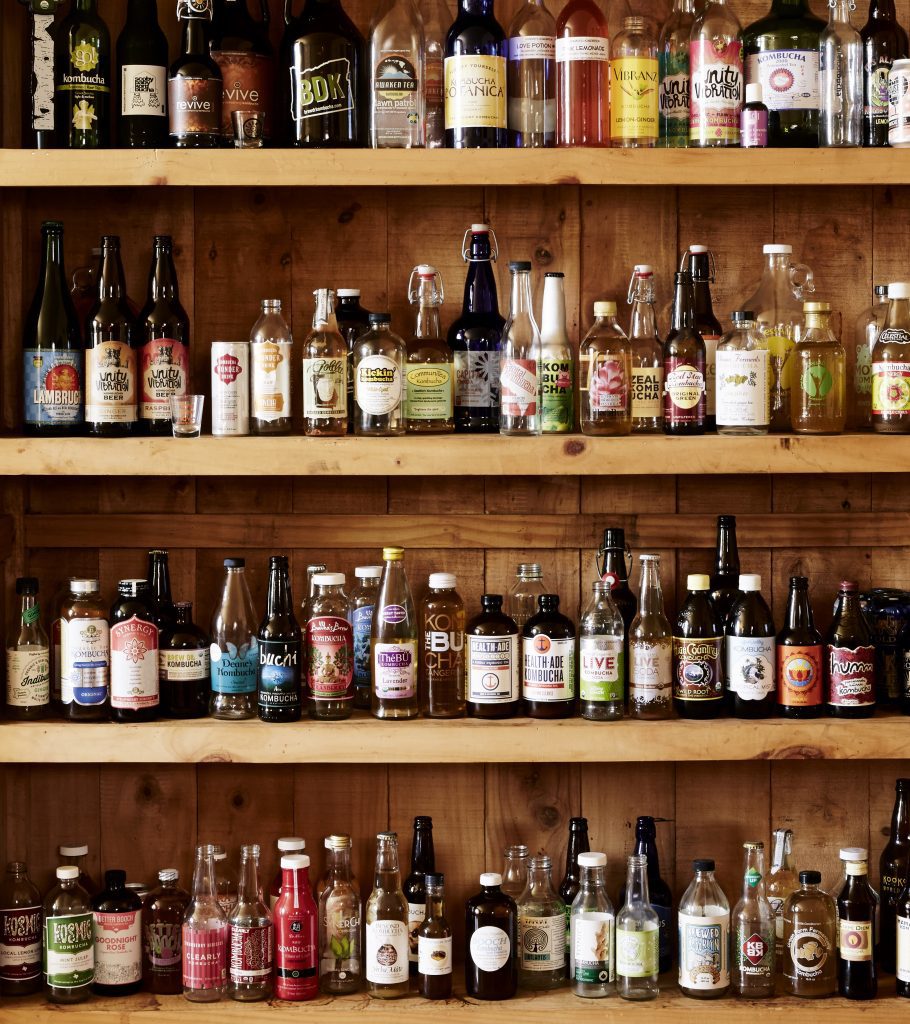
Many people first discover Kombucha through store-bought brands. Commercial Kombucha has played a major role in introducing fermentation to a wider audience and making the beverage accessible to people who may never brew at home. And Hannah has been instrumental in bringing commercial Kombucha to the general public through her work as Co-Founder of Kombucha Brewers International.
Home brewing, however, offers a different relationship to Kombucha, one rooted in hands-on tradition and a deep reverence for the foods that we are putting into our bodies and our relationship to the living Earth.
Microbial Diversity & Freshness
Home-brewed Kombucha is typically consumed fresh and doesn’t need to be stabilized for long-distance distribution. This can lead to greater variability from batch to batch—something many brewers enjoy.
Commercial Kombucha must prioritize consistency, shelf stability, and regulatory compliance, which naturally shapes how it’s produced.
Ingredient Control
Home brewers choose:
their tea
their sugar
their fermentation time
This allows for experimentation and customization that isn’t always possible at scale. This means that your brew can become a living canvas for your creativity with a world of herbs, fruits, vegetables, and more that you can use to create infinitely complex and varied flavor profiles.
Cost & Accessibility
Brewing at home trades convenience for affordability. Over time, home brewing is often more cost-effective, though it requires time, attention, and learning. In fact, the cost works out to justPENNIES per glass when compared to store-bought.
Skill-Building & Fermentation Literacy
One of the most meaningful differences is educational.
Home brewing teaches:
how fermentation behaves
how ingredients interact
how temperature and time influence outcomes
how to read sensory cues like smell, taste, and appearance
These skills build confidence and understanding—not just of Kombucha, but of fermentation as a whole. And trust me… you’ll start with Kombucha and eventually end up with cupboards, cabinets, and kitchens full of different types of ferments. The process is incredibly rewarding and empowering.
Why We Advocate for Home Brewing
Kombucha Kamp advocates for home brewing not because commercial Kombucha lacks value, but because understanding fermentation empowers people.
Home brewing turns consumption into participation. It demystifies the process and reconnects people with the living systems behind their food.
And food preservation is a skill that will always prove useful in emergencies.
From Kitchen Practice to Community Sharing
Not everyone who brews Kombucha wants to go further—and there’s no requirement to do so.
But for some, the skills developed through home fermentation naturally expand outward:
sharing with friends
teaching others
brewing at larger volumes
contributing flavors, ideas, or knowledge back into the fermentation community
Kombucha Kamp exists, in part, to support this continuum—by sharing hard-earned knowledge, encouraging safe practices, and helping preserve fermentation literacy for the next generation.
Whether someone remains a home brewer or eventually brings their work into the wider world, a strong foundation in fermentation benefits the entire ecosystem.
Why Kombucha Is Different
Kombucha is more than a recipe—it’s a living relationship.
Unlike products designed for uniformity, Kombucha responds to its environment. Temperature shifts, ingredient changes, and even seasonal rhythms can alter how it behaves.
This living quality is what draws many people to fermentation. It invites observation rather than control, patience rather than speed, and understanding rather than extraction.
Fermentation reminds us that food can be collaborative—not just manufactured.
A Living Tradition, Rediscovered
Fermentation has always lived at the intersection of science and intuition. Long before modern tools existed, people learned by paying attention—by tasting, smelling, and adjusting.
That spirit still matters.
Approaching Kombucha with curiosity rather than rigidity creates space for learning. It allows mistakes to become information and variation to become insight.
This is where fermentation shifts from technique to practice.
Why Kombucha Kamp Exists
Kombucha Kamp was created by Hannah Crum, Mother of the Modern Kombucha Movement and Author of The Big Book of Kombucha, and her partner Alex LaGory, to support people at every stage of their fermentation journey.
The goal has always been education first:
clear information
practical guidance
respect for both tradition and science
By sharing knowledge openly, we strengthen the fermentation community as a whole—home brewers, educators, and commercial producers alike.
Fermentation thrives when information flows freely. And every single batch of Kombucha will produce a new SCOBY that you can use to expand your own brewing operation or expand the fermentation community by gifting it to friends, family, and neighbors. Kombucha is, above all, a community craft!
Where to Go Next
If you’re ready to explore further, here are a few natural next steps:








 family-owned
 over 5,000
  100,000+ happy
  exceptional
  only fresh living
  lots of free articles,