






SALE
JUN Brew Now Jar Kit
Original price was: $111.00.$98.88Current price is: $98.88. -11%

Back to School
Back to School
Hannah's Special Tea Blend
Features 4oz bag = 12-16…
Price range: $18.95 through $114.95 — or subscribe to save up to 5%
View Details

🔒 Continue Reading with
Bubbles Plus
Bubbles Plus
Join Bubbles+ to access a growing library of premium recipes, brewing guides, fermentation classes, seasonal inspiration, and members-only resources from the world’s most trusted Kombucha educators.
Already a Member? Log In Here.






Kirsty
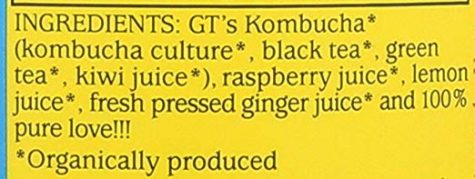
January 31, 2023 at 4:48 pmKiwi juice???? EEEEWW! Kiwis are New Zealand’s native flightless bird. Please do not juice them – they are endangered as it is.
But seriously, why do Americans insist on calling Kiwifruit just Kiwi? Because then you should then also call Dragonfruit just Dragons, Breadfruits just Breads, Passionfruits just Passions etc.
Anthea Tayag
February 1, 2023 at 2:39 pmRight! Who wants to drink juiced kiwis?! lol!
Craig McGuire
May 30, 2023 at 10:02 pmGreat read! Thanks for sharing.
I might recommend including a step in the recipe to allow the tea to cool completely to prevent killing the culture.
I’m experimenting with blueberry/pomegranate juice and fresh, minced ginger.
Trying to replicate GT’s Gingerberry.
Wish me luck!
Hannah Crum
June 1, 2023 at 1:31 pmThanks for your feedback, Craig. Let us know how the Gingerberry turns out! As for the cooling step, Step 6 has that covered – when we add the cool water, it brings the temp down to an acceptable range to add the SCOBY. We call that our “Shortcut Method.” That way we can get the SCOBY into the brew quickly to reduce the potential for contamination.
Ramae
August 22, 2020 at 4:53 pmMaybe I’ll try this with an extra scoby. I’d be too nervous to use fruit during the first ferment. I’ve been adding fruit/herbs during the second ferment and then bottling and straining on the 3rd. Seems to work best for me. Your root beer recipe is fantastic!
Joanna
May 23, 2020 at 4:55 pmGreat tutorial, thank you!! I agree this first fermentation resulted in very similar taste!! Two questions-why couldn’t you blend a kiwi with the fresh strawberry in lieu of using sugar to try to mimic the GTs flavoring? Secondly, the fizz is missing from this, so in order to taste like GTS, assuming a secondRy fermentation is needed ? I am adding 1/2 tsp sugar and trying it. Thoughts? The fizz is what I love about GTs
Hannah Crum
May 16, 2021 at 3:02 pmYes, you can experiment by adding the strawberry into primary as well – sometimes the fermentation process will “remove” or minimize the fruitiness of the flavoring so it may not have as robust a strawberry flavor. Check out this article on fizz for more tips.
Kelly
August 11, 2019 at 3:24 pmHave you had any luck making a recipe of GT spring special edition of Bloom? It states on the website that it uses fresh Elderflower, Jasmine, and Violet.
I would love to be able to reproduce this flavor.
Can you offer any advice on how to use these items?
Thank you in advance!
Hannah Crum
August 22, 2019 at 3:20 pmThere are a couple ways you might try to replicate it. You could find the flowers in a dried format (we have elderflowers here and a whole blog about them too) and then steep for 15 minutes to extract the flavors and add 1-2TB of the tisane to your 16oz bottle. Or you could simply infuse 1//2 tsp of the flowers into the bottle. Due to the perfumey nature of jasmine, (we’ve infused fresh jasmine flowers from the yard and boy is it fragrant!) we’d probably reduce that to 1/4 tsp. Haven’t tried violet but it sounds lovely!
Let us know what worked for you!
Michelle
August 21, 2020 at 9:22 amI just found this site the other day. THis flavor of kumbucha is my favorite but is seasonal or not on shelf at store at all. Did you try the suggestions for a copycat attempt? If you did, did you have any luck?
Thanks
Mandie
September 23, 2020 at 11:35 amDid you ever figure this out? I’ve tried 3 different methods and failed horribly every time, lol. I have dried (edible) flowers
Mona McClendon
April 8, 2019 at 11:14 amI’ve been making my own Kombucha for a while now. Even received a Continuous Brew container for Christmas. I LOVE GT’s Multi Green but I haven’t been able to get it for the last several months. It has Spirulina and Chlorella in it. I have purchased a high quality Spirulina but haven’t found the Chlorella yet. How much per bottle would you suggest using?
Hannah Crum
April 14, 2019 at 7:24 amWe offer a great multigreen nutritional booster called “Green Power Blend” –> https://store.kombuchakamp.com/Green-Power-Blend.html
We recommend using 1/4-1/2 tsp of powder per 16oz bottle. It may settle, simply gently swirl the bottle to activate the powder back into the liquid (don’t shake or you might end up wearing it!)
Justin
April 6, 2019 at 9:07 amI’ve had good luck matching the flavor of GT’S by adding about 12mg of a zinc tablet to the secondary ferment in the bottle. Zinc may not be for everybody but it rounds out the flavor at the end and makes for a less acidic tasting drink. Don’t add too much and you don’t even need to smash the tablet since it will dissolved e on its own. I buy 50mg tablets and try to do about1/3 of a tablet per 16 fl oz bottle of kombucha. I’ve also used crushed egg shells and calcium tablets with good results. Balancing the acidity of the booch with alkaline minerals makes the drink much better in my opinion. Do some research cuz you may actually be lacking in a mineral that you need which you can add for balance. Google celestial salts and do some research on cell salts. You may be suprised to find that you’re lacking in silica or some other cell salt that you can easily add to the secondary bottle ferment. Premium black tea is also key. Something like golden monkey, golden yunnan black tea or silver needle white tea is amazingly good. Expensive stuff but really good tasting. Don’t skimp on good quality fruit either. Always get organic local fruit you can look at before you buy it. Make your own fruit concentrate by boiling down fruit with sugar to make kind of a fruit syrup then add it to your booth at bottling time.
Angel Smith
July 23, 2018 at 6:33 amI love experimenting with the flavors of my Kombucha and Jun,and Jun in general has become my favorite between the two it’s light and crisp. I loved reading all the post and ideas. I’ve gotten my mother and husband on the kombucha train, but I haven’t managed to get my teenagers on board yet, but I’m not giving up on them. Any ideas on making it more clear? There are some that turn out beautiful in color, but they still have the cloudy film on the bottom…if it’s part of all the good stuff I won’t stress it, but if it’s possible to have all the good benefits of Kombucha and Jun without the cloudiness that’ll be even more awesome and appealing.
Hannah Crum
August 27, 2019 at 11:23 amYou can strain upon pouring to remove any yeastie bits – remember, you are also removing flavor and nutrients when you do that – but if doing it at the time of consumption, most of the flavor will be retained and hopefully the teenagers will enjoy it. Or tell them that eating the ectoplasm will give them super powers 😉
Melissa Neibacher
April 4, 2016 at 9:02 amI am new to brewing, I’ll be doing my first batch today. But I love GTs Passionberry Bliss. Has anyone tried this, tastes so tropical. Does anyone have a recipe? I love reading all your comments!!
Angela Stanton
August 23, 2013 at 2:27 pmSo how would I make my favorite G.T.’s Synergy Grape Chia? Any ideas? Brand new to brewing! Love it though!
Hannah Crum
August 23, 2013 at 11:07 pmWe have Chia seeds available in the flavor saver –> https://store.kombuchakamp.com/Flavor-Saver-4-Pack-Mix-Match.html
Soak 1 TB for 20 mins until they plump, then stir into your Kombucha. Add grape juice and drink fresh! Chia seeds are best consumed as quickly as possible to maintain freshness.
Pam
June 29, 2013 at 4:56 amThank you for all of the tips for brewing with fruit. I am wondering, do you have to rinse the SCOBY before using it in another batch. Would rinsing the SCOBY detract from its ability to ferment in future batches?
I appreciate any thoughts or input.
Hannah Crum
July 3, 2013 at 12:02 amWe do NOT recommend rinsing the SCOBY as that may deplete the yeast that cling to the culture thereby throwing off the balance between the yeast & bacteria. If you find there are quite a few brown clumps (yeast) clinging to the bottom, you may remove a few, but leave some so that you will have the proper balance & carbonation.
Alicia
April 10, 2013 at 5:26 amI’ve been using the GT’s bottles too, but I have a major problem with them. I can’t get them open!!! I swear I’ve pulled a muscle in my shoulder trying to get them open. I’ve brought them to work to get other people to try. Still, nothing. Most of the time I can get them open, but I have two that I’m sure are going to be alcoholic by the time I get them open! I’ve started using quart size canning jars instead, this also works better for me since as soon as I open a bottle I want to drink it all. I recently did fresh pineapple and it was really good! Very fizzy. Also, watermelon turned out really well for me. I don’t do the brew mentioned here, I’ve been brewing for about two months so I’m still following Hannah’s directions to a T. 😉 Speaking of which, tonight I get to decant a batch, yay!
Hannah Crum
April 10, 2013 at 7:58 amThe GT’s caps are oddly difficult to reuse. We have replacement caps available that hold in the fizz yet won’t break your arm when it comes time to open your bottle. Brew long & prosper Alicia!
Karen
April 6, 2013 at 1:17 pmWhere can you get hibiscus at?
Hannah Crum
April 14, 2013 at 12:07 pmWe have organic hibiscus available here —> https://store.kombuchakamp.com/Hibiscus.html
NEE
January 6, 2013 at 7:23 amHow long can I keep my bottle in the refrigerator? Becoz after 3-4 days, the taste is sweet less and acerbity, Could you help me. How can I fix it?
Hannah Crum
January 13, 2013 at 11:54 amKombucha may be stored indefinitely. It does continue to ferment even in the fridge. We have found that storing sour Kombucha for longer periods of time allows a deeper 2ndary fermentation which shift the sourness into a drier flavor. If it is too sour, then dilute with water or mix with juice.
Cheryl
October 19, 2012 at 10:20 pmI have a serious addiction to the Multi-green flavor. I have recently purchased a pound each of Spirulina and Chorella powder so that I could make my own. Does anyone have the recipe for that one? PLEASE????
Hannah Crum
October 24, 2012 at 8:48 pmEverybody has different tastes. The size of bottle, as well as how “green” you like it will be important factors to consider. Try adding 1/4-1/2 tsp of each to a 16oz bottle and then tweak the recipe from there. We also have Green Power Blend available for those who want a pre-blended “green” mix.
Stephanie Burks
March 25, 2018 at 9:11 pmI also have a crazy addiction to the green kombucha. I
Also make my own and have experimented with flavoring and I just ordered blue-green algae like it says on the label. Hopefully that will be enough to make it taste similar?
Hannah Crum
June 14, 2019 at 8:05 pmThe green ones are yummy! You can also try our Green Power Blend.
Tavit
October 15, 2012 at 9:47 amYep.. the old GT Synergy bottles work great! Here’s a hint for getting the labels off — put the bottle in the microwave for 25 seconds (this should loosen the label). Remove and pull off what you can. Wet whatever label is left on the bottle and put back in the microwave for 20 seconds. BE CAREFUL, glass may be very hot depending on how powerful your microwave is! At this point, the label should be very sticky and scrape off easily. I use a single-edged razor and some dish-washing soap to remove the rest. Remember to rinse well with clear water. Hope this helps.
Hannah Crum
October 24, 2012 at 8:53 pmGreat tip Tavit! Another way to remove the label is to pour hot water in the bottles, this loosens the adhesive from the inside and then you can gently peel the label off. Use caution, if the bottles are too cold, the hot water could cause them to crack.
Sabrina
January 30, 2013 at 3:44 pmJust tried the hot water method today while at work. I didnt think it would work but I’m sick of buy Goo Gone 🙂 Filled it up with hot water from the machine and let it sit for 5-10 minutes and it peeled right off. Yay!
Haley
December 5, 2017 at 3:41 pmLemon essential oil will take off gunk! (:
BethAnn
March 13, 2014 at 5:29 pmVinegar dissolves that label glue too. It’s great for getting those last stubborn bits off.
Natasha
August 6, 2012 at 9:37 amI started saving all my glass store bought Kombucha bottles before making my own. They work great! Why throw them out when you can reuse, I also use them as my water bottles. They get a lot of compliments and much more useful (recycling & economic) than the $25 glass water bottles with rubber circles over them….I just put a beer or coffee mug cozy over it for protection while bringing into the yoga studio or spin classes. My young daughter brings it into her ballet studio and has never broken it, that glass is tougher than you think 🙂
Hannah Crum
August 7, 2012 at 7:59 amWhat a great tip!
crystal
May 1, 2012 at 7:59 pmi love this site. primed to make my first batch, i’ve been drinking store-boughts and am loving it. thank you all for your generous sharings of your kombucha wisdom.
Holly
April 30, 2012 at 5:01 amInteresting! I’ll have to pick up some extra fruit this summer to try some of these techniques! Our current favorite is ginger- I simmered some grated ginger with the sugar and water, and then added it to my bottles before I added my kombucha. So it wasn’t BREWED with the ginger, but it is SO refreshing and delicious! (P.S. We brew in wide-mouthed vases and transfer to used Snapple bottles.)
mckinley
January 18, 2012 at 3:06 pmwow, these comments are so cool, totally love that ya’ll were thinking along the same lines as I was. this last month, i’ve been enjoying mango as well as peach, both super double plus good!
Shelly
January 2, 2012 at 10:45 amLoved this! Thanks you. Getting ready to start brewing my own as I have to get our grocery bill down and my buch habit is costly.
steve
July 5, 2011 at 6:57 amPlum juice is nice, even the stuff i have frozen from the summer time. or watermelon i wonder what that would be like.
Dedriann
June 6, 2011 at 11:53 amI think I am going to try the pink lemonade…Yummy. I am kinda hooked on ginger/vanilla. I am not a fan of the fruit ones but my husband likes strawberry and blueberry. I too like the GT bottles(I get the best fizz) & wish I could get my hands on more without buying their booch….I think mine tastes much better!!!
Thanks to Kombucha Kamp for all your great info!!!
hannah
June 4, 2011 at 11:16 pmStrawberry is so delicious! My current flavors are pink lemonade (strawberry, hibiscus & fresh squeezed lemon juice) and summer breeze (chamomile, lavender). So light and refreshing! Cheers 😉
Holly
May 30, 2011 at 8:32 amgreat article! funny that my friend posted a link to this today on facebook, b/c i just made a batch of strawberry this week for the first time that tastes like GT’s. all i did however was make my kombucha as usual (with tea bags like you do! i use 2 gallons of water, 2 cups of sugar, 2 cups of kombucha from a previous batch plus the scobie and let it sit 14 days, then i bottle it–i also use my old GT’s bottles!–and do a second fermentation–i like to leave it on the counter about a week, sometimes 2) this time though, after the initial fermentation, when i bottled it, i put in 2 oz pureed frozen strawberries and then filled the bottle with the brew and let it set and it really tastes GOOD! my mom said it tasted just like GT’s! thanks for sharing–and for letting me share! LOL! 🙂
hannah
May 28, 2011 at 11:14 pmMmmm – that pineapple sounds divine! How did the passionfruit turn out?
Caitlin Dean
May 27, 2011 at 1:42 pmwill definitely experiment with the “fruit brew” technique…so far have just been adding at bottle time. Current favorites are all the combinations of: lemon, ginger, raspberry and hibiscus. I think we’ve been using frozen fruit from TJs with decent results. Thanks for all the info!
Suzanne
May 27, 2011 at 12:35 pmI’ve never brewed with fruit in that manner, but have added fruit to my final product which I store in old GT bottles as well 🙂 I’ve used fresh and frozen fruit… cranberries, grapefruit, lime, orange, ginger (quick way is with honey ginger crystals), blueberries, grape, strawberries, raspberries and even my fruity green smoothie containing spinach and kale (my bootleg version of my favorite GT brand… mega green), pineapple.
anyhoo…I’ll give it a try soon!
Sean J. Lovett via Facebook
May 27, 2011 at 12:13 pmreusing old bottles…cool!